

Life isn’t a rehearsal – a personal reflection on time, family, and planning
Our updates usually focus on markets, planning opportunities, or lessons we think will help you achieve your goals. This month’s piece is a little different – and a bit more personal.
At the end of March, my mum passed away. She lived a long and (for the most part) healthy life. She was always positive and encouraging, and family was the most important thing to her. She was very much loved, and she’ll be sadly missed by many.
It’s been a difficult time for us as a family. But it’s also been a period of reflection – on what really matters, how quickly life can change, and the value of being emotionally and practically prepared.
Every day in our work with you, we talk about making the most of life and being organised for the inevitable. Going through this experience has brought home just how important those conversations are.
Life isn’t a rehearsal, so prioritise the things that matter to you
One simple message stands out above all for me right now: Life isn’t a rehearsal.
It’s something we all know, but in the rush of daily life, we sometimes forget. We only get one shot at this – so if something is important to you, don’t keep putting it off.
This personal experience has also been a powerful reminder of the practical side of planning. While nothing truly prepares you for the loss of a loved one, a bit of preparation does make a big difference when life takes an unexpected turn.
3 important planning steps to take now
Here, I’ve outlined a few important planning reminders that I’ve been reflecting on.
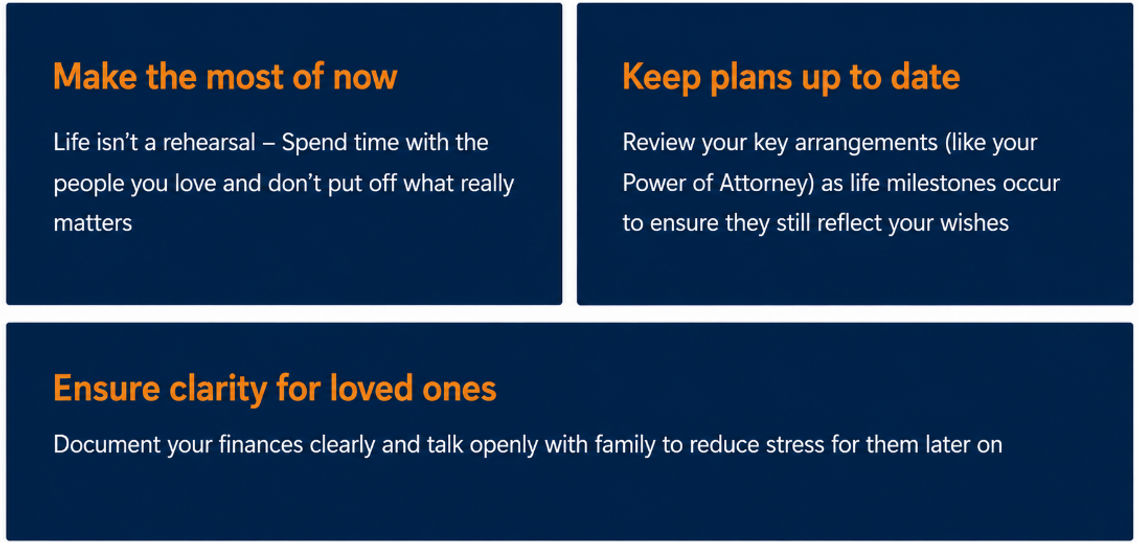
I hope they will help you and your family, too.
1. Review your Powers of Attorney as life changes
In Scotland, a Power of Attorney (POA) is typically set up to cover two distinct areas:
- Financial matters – A Continuing POA
- Personal welfare or health decisions – A Welfare POA
Having these documents in place is a crucial step, but it’s not a “one-and-done” task for life. It’s important to review your POA arrangements periodically and update them if circumstances change.
For example, as time passes, the people you originally appointed might move away, become unable to act, or simply no longer be the best choice. Or you might change your mind – about what you want or who you believe is best placed to act on your behalf.
By keeping your POA up to date, you ensure that when it’s needed, the right people are empowered to step in and help.
2. Make finances clear and accessible for your family
When someone becomes ill or passes away, a well-organised financial picture can greatly ease the stress on their loved ones.
There are some straightforward steps you can take now to make things simpler later:
- Keep an up-to-date list of accounts and policies – Account numbers, bank names, insurance policies, pensions, and important contacts should be recorded in one secure place. This helps your family (or executors) know what is where, without having to become detectives at an already difficult time.
- Ensure someone you trust can access essential funds – In the immediate aftermath of a death, household bills and other expenses still need to be paid. And yet, banks typically freeze accounts in a single name as soon as they are notified. If you have a partner or family member who might need to cover expenses, consider options that allow them to access funds in an emergency. For example, joint accounts remain accessible to the surviving account holder, which can provide quick financial flexibility.
- Simplify and consolidate where sensible – Too many scattered accounts, investments, or policies can lead to confusion. Periodically reviewing and simplifying your financial affairs (for instance, consolidating small old pensions or closing dormant accounts) can prevent headaches for your family further down the line.
All these measures are about easing the burden. Even with thorough preparation, dealing with an estate can be a slow process, often taking several months to finalise everything. By getting organised now, you save your loved ones from additional hurdles and delays at a time when they’ll have enough on their plate.
3. Talk about the difficult things early
Understandably, many families avoid conversations about death, incapacity, and finances – these topics can feel uncomfortable. However, having open conversations about these matters well in advance often proves immensely helpful.
When family members know your wishes and the practical steps you’ve taken (setting up a POA, writing a will, or communicating where they can find your financial information), it reduces uncertainty and anxiety. It ensures that, when the time comes, there are fewer surprises and misunderstandings.
In fact, we often find these conversations are not as hard as people fear. Once you start, it becomes easier, and people almost always feel a sense of relief afterwards.
It can be as simple as letting a close family member know where you keep important documents, or discussing what “living well” means to you in later life. These talks give loved ones clarity and confidence about handling things if something happens to you.
In closing, a personal thought…
Thank you for allowing me to share this more personal update.
While it’s a heavier subject than usual, it goes to the heart of what financial planning is really about – making life easier for those we care about and giving us peace of mind to enjoy the present.
I hope my experience might serve as a gentle nudge to cherish your time with loved ones and to keep your plans in good order for the future.
Take care
Graeme
Please note
If you’d like any further information, visit the Help After Loss website or speak to us here at Macmillan Financial Planning. You can get in touch at info@macfp.co.uk or call 01349 832849 to see how we can help you.
This article is for general information only and does not constitute advice. The information is aimed at retail clients only.